
Your garage door opener stops working at 7am on a Tuesday. You’re already running late, the kids need to get to school, and your car’s trapped inside. You hit the remote button again. Nothing. Again. Still nothing. Sound familiar?
If you’re living in Gymea, choosing the best garage door opener isn’t just about convenience—it’s about reliability in our coastal conditions. Salt air, humidity, and the daily grind of family life means you need an opener that won’t let you down. In this guide, we’ll break down the top garage door openers available in Australia, what features actually matter for Shire homes, and how to pick the right one for your property.
Top Garage Door Opener Brands in Australia
When you’re shopping for a garage door opener in Gymea, you’ll come across plenty of brands making big promises. But which ones actually deliver? Let’s look at the brands that Australian homeowners trust—and why they’ve earned that reputation.
Chamberlain is probably the name you’ll hear most often, and for good reason. They’re the market leader in Australia, known for openers that just keep working year after year. Their MyQ smart technology lets you control your garage door from your phone, which means no more wondering if you left it open when you’re at Cronulla beach. Chamberlain openers typically range from $400 to $800, depending on the model and features.
B&D (Doors and Openers) is the true-blue Australian brand that’s been around since 1956. They understand our climate, our homes, and what we need. Their openers are built tough for Aussie conditions, and if something does go wrong, parts and service are easy to find locally. B&D openers start around $350 for basic models and go up to $900 for their premium smart openers.
Merlin is another solid Aussie brand that’s particularly popular in the Shire. They offer excellent value for money without cutting corners on quality. Their openers are quieter than many competitors—something your family will appreciate if you’ve got bedrooms near the garage. Expect to pay between $300 and $700 for Merlin openers.
LiftMaster is Chamberlain’s commercial-grade sister brand, and while they’re pricier (starting around $600), they’re built like tanks. If you’ve got a heavy door or want something that’ll outlast your mortgage, LiftMaster deserves a look.
Here’s the thing about brands—the most expensive isn’t always the best fit for your home. A Gymea family with a standard double garage and a lightweight door doesn’t need the same opener as someone with a custom timber door in Sylvania Waters. Your local installer can help match the right brand and model to your specific setup.
Smart vs Traditional Openers for Gymea Homes
The garage door opener market has changed a lot in the past five years. Walk into any supplier today and you’ll face a choice: go with a traditional opener that uses a basic remote, or upgrade to a smart opener you can control from your phone. So which one makes sense for your Gymea home?
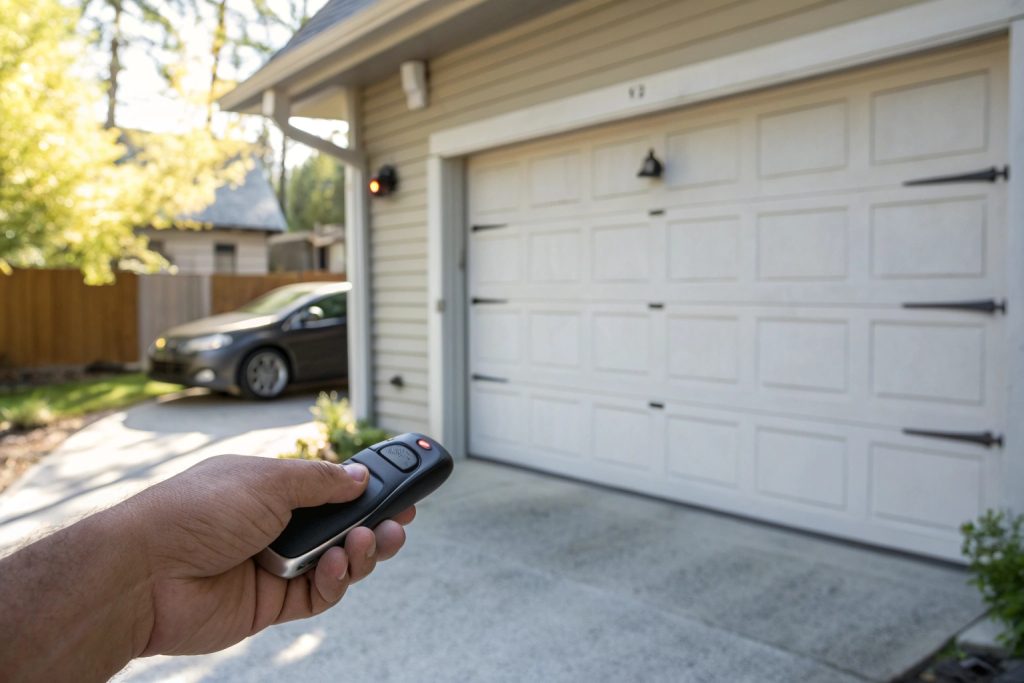
Traditional openers are straightforward. You get a remote (or two), you press the button, the door opens. That’s it. No apps to download, no WiFi to connect, no passwords to remember. For plenty of Shire families, that’s perfect. They’re also cheaper—you’ll save $100 to $200 compared to smart models. If you’re on a budget or you just want something simple that works, traditional openers get the job done without fuss.
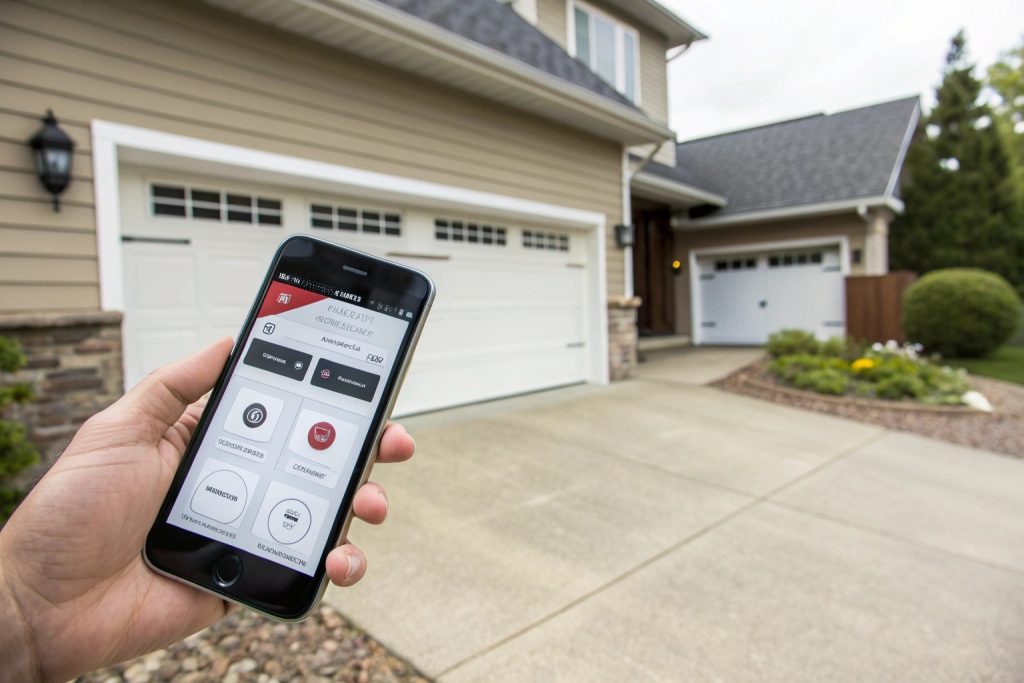
But smart openers have some real advantages that are worth considering, especially if you’ve got a busy household. The best garage door opener Gymea residents can buy these days usually includes smartphone control. Here’s what that actually means for your daily life:
You can check if you closed the garage from anywhere. How many times have you been halfway to work and thought “Did I close the garage?” With a smart opener, you just check your phone. Problem solved.
You can let people in when you’re not home. Tradie coming to do work while you’re at the office? Kids home from school before you? Open the garage remotely. Some systems even let you create temporary access codes that expire after one use.
You get alerts and activity logs. You’ll know exactly when the garage opens and closes. If you’ve got teenagers, you’ll know what time they actually got home on Saturday night.
Voice control works with Alexa and Google Assistant on most smart openers. “Hey Google, close the garage door” beats getting out of bed to check if you remembered to close it.
The downside? Smart openers need reliable WiFi in your garage. If your router’s on the other side of the house and you’ve got dodgy signal in the garage, you might need a WiFi extender. They also cost more upfront and there’s a bit more that can go wrong with the tech side of things.
For most Gymea families we work with, smart openers are worth the extra cost. The convenience factor alone pays off, and in a few years, smart garage control will probably be standard anyway—just like reverse cameras in cars. But if you’re installing an opener on a rental property or you prefer keeping things simple, a quality traditional opener will serve you well for years.
Opener Features That Matter in Coastal Areas
Living in Gymea means you’re close enough to the coast to cop the salty air and humidity that comes with it. That beautiful beach lifestyle? It’s tough on garage door openers. Features that might be “nice to have” inland become must-haves when you’re in the Shire.
Corrosion-resistant components should be at the top of your list. Salt air eats through cheap metal parts faster than you’d think. Look for openers with galvanised steel chains or reinforced belts, and stainless steel or coated hardware. B&D and Chamberlain both offer coastal-rated models that use materials designed to handle our conditions. Spend an extra $50 now or replace corroded parts in three years—your call, but the math isn’t hard.
Battery backup is one of those features you don’t appreciate until you need it. Summer storms knock out power in the Shire pretty regularly. Without battery backup, you’re manually lifting your garage door in the rain. Most quality openers now include this as standard, but double-check before you buy. It’s worth the extra $80-100.
Belt drive vs chain drive matters more here than you might think. Chain drives are cheaper ($300-500) and super reliable, but they’re noisy. If your garage shares a wall with a bedroom, that rattling chain at 6am won’t make you popular. Belt drives ($450-700) run quieter and handle humidity better because there’s less metal-on-metal contact. The belt itself is less likely to rust or corrode in coastal air.
Motor strength needs to match your door. This isn’t about buying the most powerful motor—it’s about getting the right one. A standard aluminium or steel door needs about 0.5 to 0.75 horsepower. Got a heavy timber door or an insulated double door? You’ll want 0.75 to 1.0 horsepower. Too weak and the motor burns out early. Too strong and you’re wasting money on power you don’t need.
Safety sensors are legally required on all new installations in Australia, but quality matters. Cheaper openers use basic sensors that can get knocked out of alignment easily. Better models have self-diagnostic sensors that alert you if something’s wrong before it becomes a safety issue. With kids and pets running around, this isn’t the place to cut corners.
Rolling code technology stops thieves from copying your remote signal. Every time you use the opener, it generates a new code. Older fixed-code systems can be hacked with a code grabber in about 30 seconds. Most decent openers include rolling codes now, but check the specs—some budget models still use the old fixed codes.
The best garage door opener Gymea homeowners can install is one that’s actually designed for coastal conditions. Don’t just grab whatever’s cheapest at Bunnings and hope for the best. Talk to a local installer who knows what holds up in the Shire and what fails after two years of salt air.
Installation Considerations for Different Opener Types
So you’ve picked out your opener. Now comes the question most Gymea homeowners ask: “Can I install this myself, or do I need a professional?” The honest answer depends on your opener type and your DIY skills—but there’s more to consider than just whether you can physically do it.
Chain and belt drive openers are the most common type you’ll see in Shire homes. They mount to the ceiling and use a rail system. Installation looks straightforward on YouTube, and technically, it is if you’re handy. You’ll need about 4-6 hours, a decent drill, a ladder, and someone to help you lift the motor unit. The tricky bit isn’t the mounting—it’s getting the tension right on the chain or belt and properly aligning the safety sensors. Get it wrong and your door won’t open smoothly, or worse, the sensors won’t work properly and you’ve got a safety issue.
Jackshaft openers mount on the wall beside your door instead of the ceiling. They’re perfect if you’ve got a high ceiling or limited headroom in your garage. Installation is actually a bit easier than ceiling-mounted units because you’re not working overhead, but you need to get the wall mounting absolutely spot-on. These openers put more stress on the mounting points, so if your garage wall is old brick or weathered timber, you might need reinforcement.
Direct drive openers are the quietest option—the motor travels along a fixed rail, so there’s no chain rattling. Installation is similar to chain drives, but they’re heavier units. You’ll definitely want two people for the job.
Here’s what most people don’t think about until it’s too late: electrical work. Your garage needs a power point near where the opener mounts. If you don’t have one (and many older Gymea garages don’t), you’ll need a sparkie. That’s not a DIY job—it’s illegal to do electrical work without a license in NSW, and your insurance won’t cover you if something goes wrong. Budget $200-400 for an electrician if you need a new power point installed.
Professional installation costs $150-300 on top of the opener price, but here’s what you get: proper mounting (those ceiling joists need to be located correctly or your opener could literally fall down), correct door balance adjustment, safety sensor alignment, and someone who knows what they’re doing setting the force limits. Most importantly, you get a warranty on the installation work. If something goes wrong, they come back and fix it.
The DIY savings look good on paper, but we’ve seen plenty of homeowners spend their Saturday installing an opener, only to call us Monday morning because it’s not working right. By the time they’ve bought extra parts, spent hours troubleshooting, and then paid for professional repairs anyway, they’ve lost money and a weekend.
If you’re installing a basic opener on a standard door and you’re confident with tools, DIY can work. But if you’ve got a heavy door, an older garage with quirks, or you’re installing a smart opener that needs WiFi setup and programming, professional installation pays for itself in time saved and peace of mind.
Warranty and Support Comparison Guide
You’ve spent $500-800 on a garage door opener. It should last 10-15 years, right? Maybe. That depends entirely on the warranty backing it up and whether you can actually get support when things go wrong. Let’s break down what the major brands offer and what it really means for Gymea homeowners.
Chamberlain offers some of the best warranty coverage in Australia. Their standard motors come with a 5-year warranty, and the mechanical parts get 2 years. The MyQ smart technology is covered separately for 1 year. Here’s what matters though—Chamberlain has authorised service agents all through the Shire, so getting warranty work done doesn’t mean shipping your opener to Melbourne and waiting three weeks. Parts are readily available, and most repairs happen within a few days.
B&D backs their openers with a 5-year motor warranty and 12 months on parts. As an Australian company, their support is local and they understand our conditions. The advantage with B&D is their service network—there’s almost always a B&D technician within 30 minutes of Gymea. That matters when you need help fast. They also offer extended warranty options if you want extra coverage.
Merlin provides a 3-year motor warranty and 12 months on accessories. It’s not quite as comprehensive as Chamberlain or B&D, but their products are reliable enough that most owners never need to use it anyway. Support can be a bit slower since they’re a smaller operation, but their openers are straightforward enough that local technicians can usually sort out problems without too much fuss.
LiftMaster matches Chamberlain’s warranty (they’re sister companies) with 5 years on motors and 2 years on parts. Where LiftMaster shines is in their commercial-grade build quality—these things rarely break in the first place. When they do, the same authorised agents who handle Chamberlain also service LiftMaster units.
Here’s what warranty actually covers and what it doesn’t: Most warranties cover manufacturing defects and motor failures. They don’t cover damage from incorrect installation (another reason to consider professional install), normal wear and tear, or damage from external factors like power surges. If a storm knocks out your opener, that’s an insurance claim, not a warranty issue.
Parts availability is something nobody thinks about until they need it. Chamberlain and B&D parts are easy to get—your local installer probably has common parts in stock. Merlin parts might take a few days to order. For other brands, especially imported ones, you could be waiting weeks for a replacement circuit board or remote.
Local support matters more than national phone numbers. A 1800 number that connects you to a call centre in Sydney doesn’t help much when your garage door won’t close and it’s about to rain. Look for brands that have actual technicians servicing the Sutherland Shire. Ask your installer which brands they’re certified to repair—if they can’t fix it, you’ll be looking for someone else when problems pop up.
One last thing about warranties: register your opener after installation. Sounds obvious, but half the people who buy garage door openers never bother. Then when something breaks, they can’t prove when they bought it or that it’s still under warranty. Takes five minutes online and saves you hundreds down the track.
Get the Right Opener for Your Gymea Home
Choosing the best garage door opener Gymea homes need doesn’t have to be complicated. Start with a reliable brand like Chamberlain, B&D, or Merlin. Decide if smart features are worth the extra cost for your lifestyle. Make sure you’re getting coastal-rated components that can handle the salt air. And don’t skip professional installation unless you’re genuinely confident in your skills.
The right opener will give you 10-15 years of trouble-free service. The wrong one—or a good one badly installed—will have you dealing with repairs, replacements, and frustration way sooner than you should.
Need help choosing the right garage door opener for your property? Our team knows what works in Gymea’s coastal conditions and what doesn’t. We can assess your door, recommend the best options for your budget, and handle the installation properly the first time. Get in touch today for a free quote and honest advice—no pressure, just straight answers about what your home actually needs.