
You know that sound, right? That grinding, clunking noise your garage door makes every time you hit the remote – the one that makes you wince and hope the neighbours aren’t judging you. Last week, my mate in Kirrawee was telling me how his opener finally gave up during the morning school run. Car trapped in the garage, kids late to school, him late to work. Not exactly how you wanna start your Tuesday.
Here’s the thing about garage door openers – they don’t usually just die without warning. Your opener’s been dropping hints for months, maybe even years. But we’re all so busy with work and family stuff that we ignore the signs until we’re stuck in the driveway looking like idiots, frantically pressing a remote that’s given up on life. If you’ve noticed your opener acting weird lately, chances are it’s trying to tell you something.
Warning Signs Your Opener Won’t Last Another Season
I’ve seen enough garage door openers give up the ghost to know there’s a pattern. Your opener doesn’t just wake up one morning and decide to quit – it’s been screaming for help, you’ve just been too busy to listen.
The noise is getting worse, not better. If your opener sounds like it’s auditioning for a horror movie every time you use it, that’s problem number one. We’re talking grinding, squealing, or that awful chain-dragging sound. Sure, sometimes it’s just needing a bit of lubrication, but if you’ve already tried that and it’s still making a racket? Yeah, the motor’s probably on its way out. And here in the Shire with all the salt air from being so close to Cronulla beach, that corrosion speeds things up real fast.
It’s taking forever to open or close. Remember when your door used to zip open in like 10 seconds? Now you’re sitting there counting to 30, 40, maybe even a minute while it crawls up at a snail’s pace. That’s your opener’s motor struggling, mate. The gears inside are wearing down, and it’s working twice as hard to do half the job. You might think “ah well, it still works, right?” but that extra strain is cooking your motor from the inside. You’re basically watching it die in slow motion.
The door reverses for no reason. You hit the button to close, the door goes down halfway, then suddenly decides nope and goes back up again. Could be the safety sensors playing up, or it could be your opener’s logic board going haywire. Either way, when you’ve got a 15-year-old opener, replacing those parts often costs nearly as much as a new unit anyway.
Your remote only works from right next to the garage. Used to be able to open the door from down the street, now you’ve gotta be practically parked in front of it. That’s the receiver dying. And before you think “I’ll just replace the remote” – if your opener’s from before 2010, good luck finding compatible remotes. They don’t make ’em anymore.
It just stops working randomly. Some days it works fine, other days it’s dead. You’re out there manually lifting your door like it’s 1985, wondering what you did to deserve this. That’s electrical components failing intermittently, and it’s only gonna get more frequent until it’s permanent.
Here’s what I tell people – if you’ve got two or more of these signs happening, you’re not being paranoid about needing a replacement. You’re actually being realistic.
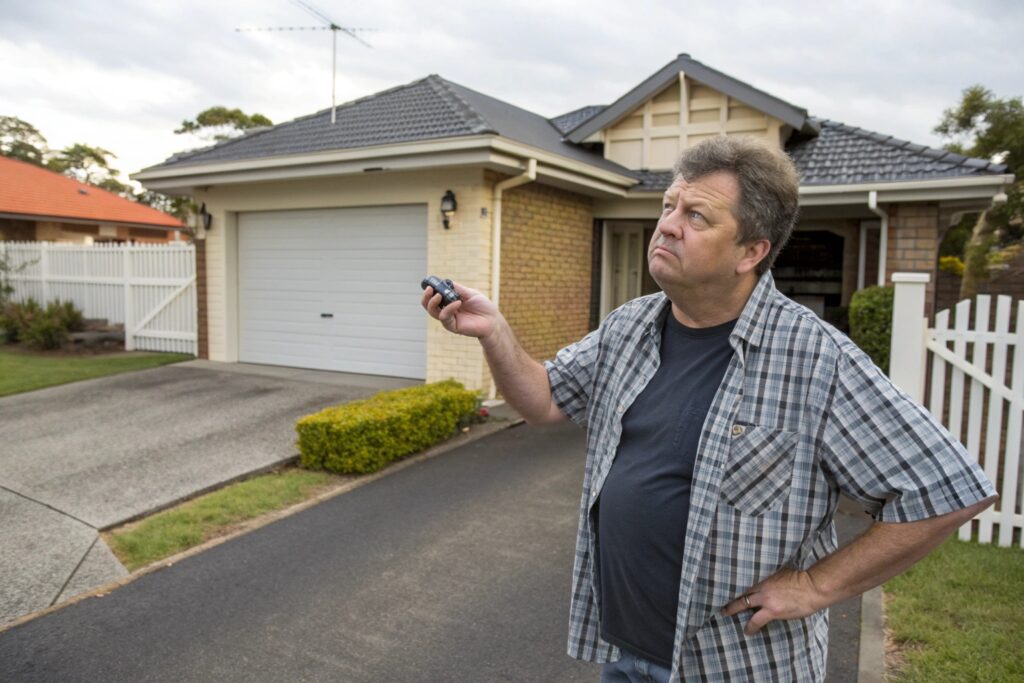
Security Vulnerabilities in Older Kirrawee Garage Openers
Alright, time for some real talk that might freak you out a bit – but you need to hear it. Those old garage door openers? They’re about as secure as leaving your front door unlocked with a sign saying “come on in.”
Fixed code technology is basically useless now. If your opener’s from before 2011, it’s probably using fixed code technology. What’s that mean in normal human language? Every time you press your remote, it sends the exact same signal to your opener. Same code, every single time. And yeah, people can copy that code with a device they bought on eBay for like 50 bucks. I’m not trying to scare you, but I’ve had customers in Kirrawee who’ve had their cars nicked straight out of their garage because someone sat in the street, copied their code, and walked right in the next day when they were at work.
Modern openers use rolling code technology – generates a new code every single time you use it. Can’t be copied. Can’t be hacked by some dodgy bloke sitting in a van down the street.
Your garage is basically your front door. Think about it – most Shire homes have internal access from the garage straight into the house. You’ve probably got the door from your garage to your kitchen unlocked most of the time, right? So if someone gets into your garage, they’re in your house. They’re not even breaking a window or kicking in a door where the neighbours might notice. They’re just walking through your garage like they own the place. NSW Police recommend securing garage doors as part of your overall home security strategy.
The manual release is a known weak point on old models. There’s videos on YouTube – actual criminals sharing this stuff – showing how to hook the emergency release cord through the top of old garage doors with a coat hanger. Takes about 30 seconds if you know what you’re doing. Newer openers have redesigned this with better security, but if yours is 15+ years old, it’s probably still vulnerable.
No smartphone alerts means no peace of mind. Let’s say you’re at work in the city, or maybe you’ve taken the family down to Wanda Beach for the afternoon. With an old opener, you’ve got no idea if your garage door’s open or closed. Did you close it this morning? You think you did, but now you’re not sure. With a modern smart opener, you get an alert on your phone if the door’s been open for more than 10 minutes. You can check the status any time, close it remotely if you forgot. That’s the difference between wondering and knowing your home’s secure.
I had a customer in Gymea last year who came home from a weekend away to find their garage had been open the entire time. Turned out the old opener’s close button got stuck. Lucky for them, nothing got stolen, but mate – that’s not a risk worth taking when you’ve got $80,000 worth of cars and tools sitting there.
Smart Technology Benefits for Modern Kirrawee Homes
Here’s where things get actually exciting – and I know “exciting” and “garage door opener” don’t usually go together in the same sentence, but hear me out.
Control everything from your phone, even when you’re at Shark Park. Modern smart openers connect to your wifi, and suddenly your garage door’s part of your smart home setup. You can open and close it from literally anywhere. Forgot to close it before you left for work? Fix it from the train. Want to let the landscaper in while you’re stuck in a meeting? Open it remotely, get an alert when they leave, close it again. It’s like having a second brain that actually remembers stuff.
My neighbour upgraded to a MyQ system last year and reckons it’s saved his marriage – his wife used to lose it every time she thought he’d left the garage open. Now she just checks her phone instead of calling him at work to have a go at him.
Voice control actually works now. “Alexa, close the garage door.” That’s it. No getting up from the couch, no hunting for the remote that’s somehow always disappeared. If you’ve already got Google Home or Alexa running your lights and music, why wouldn’t you add the garage door to the mix? Makes you feel like you’re living in the future, even if you’re just in Kirrawee.
Delivery notifications you can actually use. Let’s say you’ve ordered something from Bunnings and you’re at work. With the old opener, either you’re home or you’re leaving a note saying “leave it at the front door” where every dodgy character walking past can see it. With a smart opener, the delivery driver can drop it safely in your garage, you get a notification that they’ve been and gone, and you can close the door remotely. No more porch pirates nicking your stuff.
Integration with your security cameras makes sense. If you’ve got Ring or Nest cameras – and heaps of people in the Shire do – a smart opener works with them. Door opens, camera starts recording. You get a notification with a video clip of who’s coming or going. It’s not being paranoid, it’s just being smart about protecting your family and your property.
Battery backup means you’re never trapped. Kirrawee loses power sometimes – storms, maintenance, whatever. Old opener? You’re manually lifting that door, which is a real pain when it’s absolutely bucketing down. Modern openers have battery backup built in. Power goes out, opener keeps working. You’re not stuck outside in the rain looking like a drowned rat while you wrestle with the manual release.
Cost Comparison: Repair vs. Replace for Aging Openers
Okay, this is where everyone wants the straight answer – am I throwing good money after bad by fixing this thing, or should I just bite the bullet and replace it?
Here’s the rule I use, and it hasn’t steered me wrong yet. If your opener’s under 10 years old and the repair costs less than half the price of a new opener, fix it. If your opener’s over 15 years old and the repair’s gonna cost you more than $400-500, you’re better off replacing. Anything in between? Well, that’s where you gotta think about what else might go wrong in the next year or two.
Let’s talk actual numbers for Kirrawee homeowners. A basic repair – replacing a sensor, fixing a loose chain, swapping out a worn gear – that’s usually $150 to $300. Not too bad, and if your opener’s relatively new, that’s money well spent. But when you start getting into motor replacements ($500-700) or logic board failures ($400-600), now you’re looking at serious cash. And if your opener’s already 12-15 years old, what are the chances something else won’t break in six months? Pretty high, mate.
A new opener installation runs about $600 to $1,200 for a decent quality unit with professional installation. Yeah, it’s more upfront, but you’re getting a warranty, modern security features, smart home capability, and peace of mind that you won’t be calling for another repair in three months.
The hidden costs of keeping an old opener alive. Here’s what people don’t think about – that old opener’s chewing through electricity like there’s no tomorrow. Modern openers use LED lights and efficient motors. Your 20-year-old clunker is probably costing you an extra $50-80 a year just in power. Over five years, that’s $250-400 you’re throwing away for no reason.
Parts availability becomes a nightmare. I’ve had customers call me desperate for parts for their 1998 Chamberlain. Mate, they stopped making those parts in 2010. You’re hunting on eBay, hoping some bloke in Queensland’s got the right gear in his shed. Even if you find it, you’re paying premium prices for second-hand stuff that might be dodgy anyway. New opener? Walk into Bunnings tomorrow and grab whatever you need.
I’m not trying to talk you into spending money you don’t need to spend. If your opener’s 8 years old and needs a $200 part, absolutely fix it. But if you’re looking at a 16-year-old opener that needs $600 worth of work? That’s not a repair, that’s denial.
Energy Efficiency Gains with Modern Opener Technology
Right, so energy efficiency might not sound like the most thrilling topic, but stick with me here – because this actually affects your power bill every single month.
Old openers are power vampires. Your 15-year-old opener sitting there in standby mode? It’s sucking power 24/7, even when you’re not using it. They call it phantom power drain, and yeah, it’s a real thing. Modern openers with energy-efficient standby modes use about 75% less electricity just sitting there doing nothing. Over a year, that’s actually noticeable on your bill.
LED lighting makes a bigger difference than you’d think. Old openers came with incandescent bulbs – you know, the ones that get hot enough to fry an egg. They’d burn out every few months, and while they were working, they were chewing through power like nobody’s business. New openers use LED lights that last literally years and use a fraction of the electricity. Plus they’re brighter, so you can actually see what you’re doing in your garage instead of fumbling around in the dim light trying to find the kids’ bike helmets.
Soft start and stop technology saves energy and wear. This is pretty clever actually – modern openers don’t just slam on the brakes when your door reaches the top or bottom. They slow down gradually, which means less strain on the motor, less electricity wasted on that sudden stop, and your door lasts longer too. It’s smoother, quieter, and more efficient. Old openers are like doing burnouts at every red light – works, but you’re wasting energy and wearing everything out faster.
The motor efficiency has improved heaps. New DC motors (that’s direct current for anyone who cares) are way more efficient than the old AC motors. They use variable speed control – speed up when they need power, slow down when they don’t. Your old opener runs at full tilt the entire time, whether it needs to or not. It’s like driving everywhere in first gear versus actually using your gearbox properly.
Insulated doors work better with efficient openers. If you’ve upgraded to an insulated garage door – or you’re thinking about it – pairing it with a modern efficient opener makes sense. Your garage stays cooler in summer, warmer in winter, and the opener doesn’t have to work as hard because the door’s better balanced. Less work means less power used. And here in Kirrawee where summer can get absolutely brutal, keeping your garage even a few degrees cooler means your car’s not a sauna when you get in it. Check out these energy efficiency improvements for garages that can reduce your heating and cooling costs.
Smart features actually save you money. The auto-close function on smart openers means you’re not accidentally leaving your door open all day with the air conditioning or heating escaping through your garage. The vacation mode shuts everything down properly when you’re away. Little things, but they add up over time.
Look, I’m not saying you’ll save $500 a year on electricity. But over the 15-20 year lifespan of a modern opener, you’re probably looking at $600-800 in power savings compared to keeping an old clunker running. That’s a decent chunk of the replacement cost right there, before you even factor in all the other benefits.
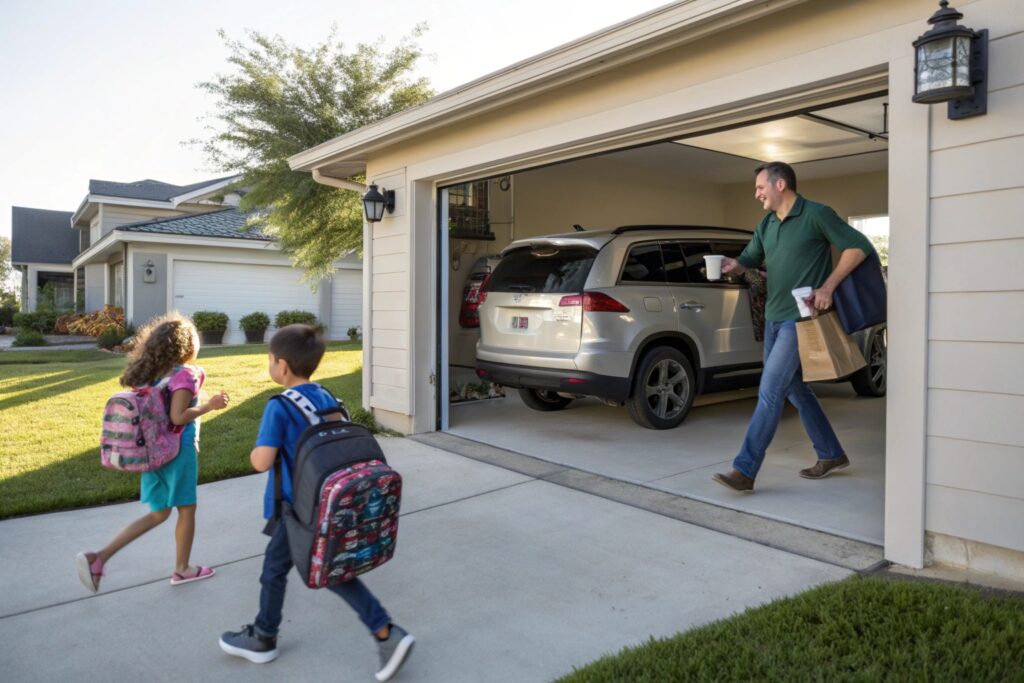
Installation Process: What Kirrawee Homeowners Should Expect
Alright, so you’ve decided to pull the trigger on a new opener – smart move. Now you’re probably wondering what you’re in for, how long it’s gonna take, and whether your whole day’s gonna be shot.
The actual installation takes about 2-3 hours, tops. We’re not building the Opera House here. A professional installer shows up, pulls out the old opener, mounts the new one, wires it up, programs your remotes, tests everything twice, and they’re done. Most jobs I’ve seen in Kirrawee are finished before lunch. The key word there is “professional” though – your mate who reckons he can do it based on a YouTube video? Yeah, that’s gonna take all weekend and probably end with a call to an actual tradesman anyway.
You don’t need to be home the whole time, but someone should be there. The installer needs access to your garage obviously, and they’ll want to show you how everything works at the end. But you don’t need to stand there watching them the entire time. Drop the kids at school, come back, have a coffee, answer some emails – they’ll get on with it. Most blokes appreciate not having someone hovering over their shoulder anyway.
The mess is minimal if they know what they’re doing. Old opener comes down, new one goes up, they clean up the packaging and any debris. You’re not talking about dust sheets and major disruption here. Maybe don’t park your pristine white Mercedes directly underneath while they’re working, but otherwise it’s pretty straightforward. Good installers protect your cars with drop sheets anyway.
Programming and setup takes about 10 minutes. The installer will sync your remotes, set up the safety sensors properly, adjust the travel limits so your door opens and closes exactly right, and if you’ve gone with a smart opener, they’ll help you get the app connected to your wifi. Some installers will even show you how to add it to your Alexa or Google Home if you want. Takes longer to explain it than to actually do it.
Testing is the part you shouldn’t skip. Good installer will run through everything – safety sensors, auto-reverse function, manual release, remote range, the lot. They should put something in the path of the door to make sure it reverses properly. If they try to rush off without testing, that’s a red flag. Make them do it properly.
Time to Upgrade Your Kirrawee Garage Door Opener
Look, if you’ve made it this far through the article, you probably already know your opener’s on borrowed time. You’ve recognised at least a couple of those warning signs, you’re thinking about the security issues, and you’re tired of that embarrassing noise every time you open the door.
Here’s what I reckon – don’t wait until it completely dies on you during the morning rush. Get ahead of it. Get a quote, see what your options are, and make the decision on your terms instead of in a panic when you’re stuck with a car trapped in the garage.
Modern openers aren’t just about convenience – they’re about security, efficiency, and actually being able to use your garage without wondering if today’s the day everything finally gives up. And if your opener’s 15+ years old? Mate, you’ve got your money’s worth out of it. Time to move on.