
Last month, a warehouse owner in Miranda called us with a familiar question. He’d just gotten three quotes for a new commercial roller door, and the cheapest one was still double what his mate paid for a residential garage door. “Is this right?” he asked, sounding a bit frustrated. “Or are they just having a lend of me?”
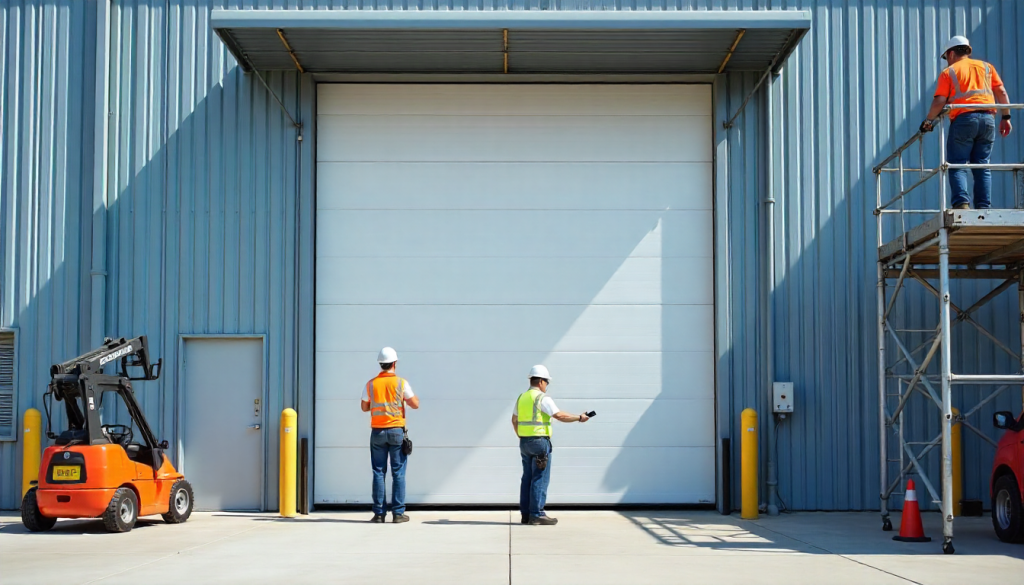
Here’s the thing—commercial garage doors do cost more than residential ones, and there’s actually good reasons for it. When you’re running a business in Sutherland Shire, whether it’s a workshop in Kirrawee or a retail space in Cronulla, your garage door isn’t just keeping your car safe. It’s protecting your entire livelihood, dealing with constant heavy use, and meeting strict Australian safety standards that residential doors don’t have to worry about.
The price difference can feel like a shock at first. But once you understand what goes into these industrial-strength systems—and what you’re really getting for your money—the investment starts making a lot more sense. In this guide, we’ll break down exactly why commercial garage doors carry that higher price tag, and why cutting corners on this particular expense could cost your business far more in the long run.
Heavy-Duty Materials and Construction Requirements
The biggest difference between commercial and residential garage doors starts with what they’re actually made from. While your home garage door might use 25mm thick panels with basic steel sheeting, commercial doors need materials that can cop a beating day after day without breaking a sweat.
Commercial garage doors typically use:
- 40-50mm thick insulated panels (nearly twice as thick as residential)
- Heavy-gauge steel or aluminium rated for thousands more cycles
- Reinforced brackets and hinges designed for constant operation
- Industrial-grade weather seals that won’t wear out after a few months
Think about it this way—a busy loading dock in Caringbah might see that door go up and down 50 times a day. That’s over 18,000 cycles a year. Your average home garage door? Maybe gets used 4 times a day, if that. The materials have to be built completely different to handle that kind of workload.
The frames and tracks are beefier too. Where a residential door might use 2mm steel tracks, commercial installations need 3mm or thicker gauge steel. Every component—from the rollers to the cables—is sized up to handle heavier doors and more frequent use. It’s like comparing a ute built for weekend trips to Bunnings with a truck designed for daily deliveries across Sydney. Both do the job, but one’s engineered for serious work.
The bottom line: Those heavy-duty materials aren’t just about lasting longer—they’re about keeping your business running without unexpected downtime when cheaper materials would’ve already failed.
Enhanced Security Features and Access Control Systems
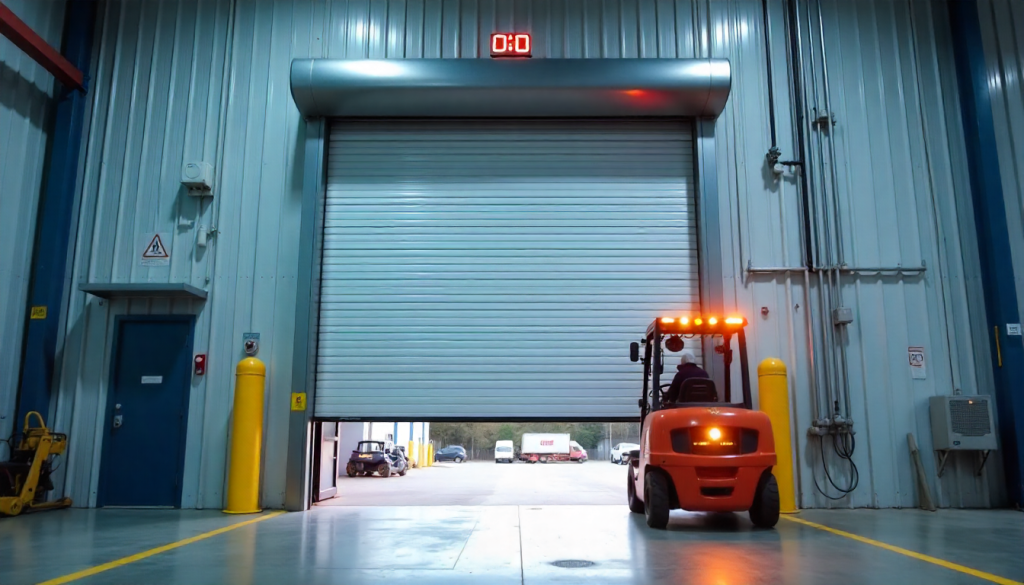
When a business owner in Gymea had their workshop broken into through a standard residential-grade door, they learned an expensive lesson about security. Commercial doors aren’t just stronger—they come packed with security features that residential doors simply don’t offer.
Modern commercial garage doors include:
- Multi-point locking systems that secure the door at several points, not just one
- Anti-lift technology preventing forced entry from the bottom
- Integrated access control systems with keypads, card readers, or smartphone apps
- Automatic locking mechanisms that engage every time the door closes
- Tamper-resistant hardware that can’t be easily removed from outside
These aren’t fancy extras—they’re necessities when you’ve got thousands of dollars worth of equipment, inventory, or vehicles sitting behind that door. Insurance companies know this too. Many won’t even cover commercial properties without proper security-rated doors, and some offer premium discounts when you install certified commercial systems.
The access control alone can run into thousands of dollars, but it gives you complete control over who enters your property and when. You can issue temporary codes for deliveries, track every entry and exit, and even integrate with your existing security cameras and alarm systems. Try doing that with a standard residential setup.
Safety Standards and Compliance Costs
Here’s something most business owners don’t realise until they get their first quote—commercial garage doors have to meet Australian Standard AS/NZS 4084:2012. That’s not just bureaucratic red tape. It’s about keeping your workers, customers, and visitors safe.
Commercial doors must have:
- Photo-eye sensors positioned at multiple heights
- Pressure-sensitive safety edges that reverse if they hit something
- Emergency manual release systems accessible from both sides
- Warning lights and audible alarms for larger doors
- Regular safety testing documentation to maintain compliance
Every one of these safety features adds to the cost, but they also protect you from liability claims that could destroy your business. One accident with a non-compliant door could cost you hundreds of thousands in legal fees and compensation. We’ve seen it happen to businesses who tried to save money with residential doors in commercial settings.
The testing and certification process itself isn’t cheap either. Manufacturers have to put their commercial doors through rigorous testing—wind loading tests, cycle testing, force testing—and provide documentation proving they meet every requirement. That research and development cost gets built into the price, but it means you’re getting a door that’s been properly engineered for commercial use.
Installation Complexity and Professional Requirements
Installing a commercial garage door isn’t a weekend DIY job. We’re talking about doors that can weigh 200-500 kilograms, require three-phase power connections, and need precise calibration to operate safely. The installation process alone explains a good chunk of the price difference.
Commercial installation involves:
- Structural assessment to ensure your building can handle the door’s weight
- Electrical work by licensed electricians for motor connections
- Load testing to verify proper balance and operation
- Safety system calibration for all sensors and emergency stops
- Council approvals and inspections depending on your location
A typical residential door might take half a day to install. Commercial installations often need 2-3 days, especially if there’s electrical work or structural modifications involved. You’re also required to use licensed installers who carry specific insurance for commercial work—you can’t just grab any handyman off Airtasker.
The commissioning process is more complex too. Every safety feature needs testing and documentation. The installer has to train your staff on proper operation, emergency procedures, and basic maintenance. They’ll provide compliance certificates that you’ll need for insurance and WorkSafe requirements. All this professional expertise and time adds up, but it’s non-negotiable for commercial installations.
Commercial-Grade Hardware and Component Costs
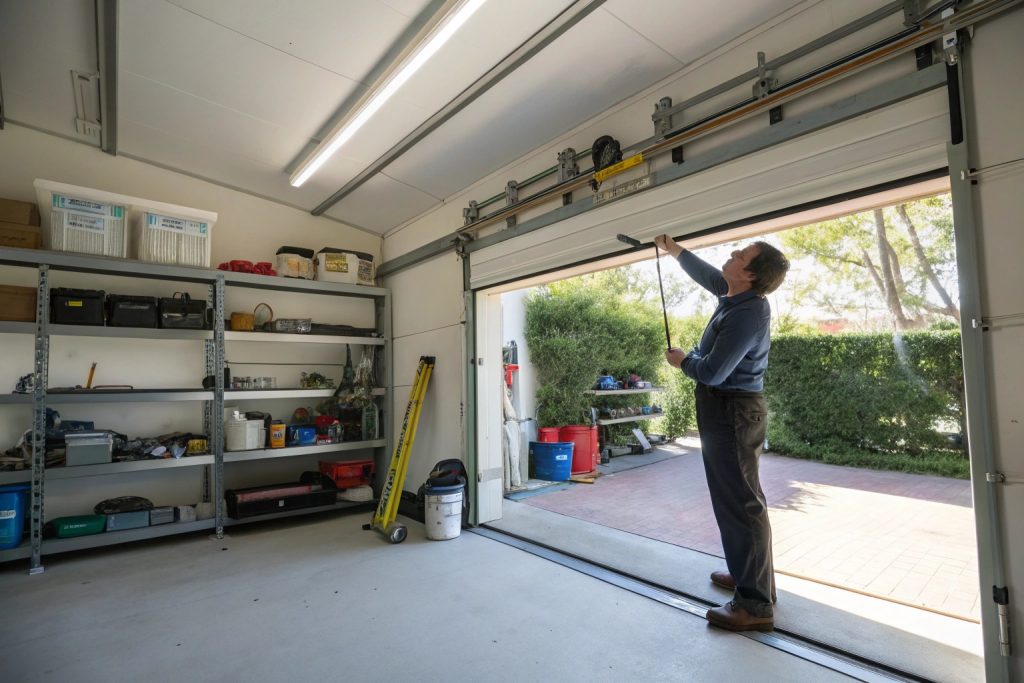
The motor on your home garage door might be rated for 10,000 cycles. Commercial operators? They’re built for 100,000 cycles or more. That’s just the beginning of the hardware differences that drive up commercial door costs.
Commercial doors use:
- High-cycle springs tested for 50,000-100,000 operations
- Industrial motors with 1-2 horsepower (vs 0.5 HP residential)
- Heavy-duty chain or belt drives designed for constant use
- Commercial-grade bearings and bushings that don’t need constant lubrication
- Backup battery systems to keep operating during power outages
The control systems are more sophisticated too. While your home door might have a simple wall button and remote, commercial systems include variable speed controls, timer functions, partial opening settings, and integration capabilities with building management systems. Some can even detect when maintenance is needed and alert you before a breakdown occurs.
These components cost more because they’re essentially industrial equipment. The manufacturers produce them in smaller quantities than residential parts, using higher-grade materials and tighter tolerances. A commercial-grade photo eye sensor might cost three times what a residential one does, but it’ll work reliably in dusty warehouse conditions where a cheaper sensor would fail within months.
Long-Term Value: Durability vs Initial Investment
When a Sutherland Shire manufacturing business replaced their residential door for the third time in five years, they finally did the maths. Those “cheaper” doors had actually cost them more than a proper commercial door would have—and that’s before counting the lost productivity from breakdowns.
Consider the real costs over 10 years:
- Residential door in commercial setting: $3,000 initial + $6,000 in replacements + $4,000 in repairs = $13,000
- Commercial door: $8,000 initial + $1,500 in maintenance = $9,500
But the hidden costs tell the real story. Every breakdown means delayed deliveries, frustrated customers, and staff standing around waiting for emergency repairs. One of our clients in Miranda calculated that a single door failure during their busy season cost them $5,000 in lost sales and overtime wages.
Commercial doors also hold their value better. A well-maintained commercial door can last 20-30 years with proper servicing. They’re designed to be repaired rather than replaced—you can swap out individual components as needed instead of scrapping the whole system. Try finding replacement parts for a residential door from 10 years ago. With commercial doors, parts availability is guaranteed for decades.
The energy savings add up too. Commercial doors with proper insulation and seals can cut your heating and cooling costs significantly, especially in large spaces. One warehouse in Kirrawee saved $200 a month on energy bills after upgrading to insulated commercial sectional doors.
Industry-Specific Customization and Specialized Features
Here’s where commercial doors really earn their price tag—they’re built specifically for your industry’s needs. A food storage facility in Cronulla needs different features than an auto workshop in Caringbah, and commercial doors can be customised accordingly.
Specialized options include:
- High-speed operation for busy logistics facilities (up to 1 metre per second)
- Washdown-rated doors for food processing areas
- Fire-rated doors meeting specific resistance requirements
- Cyclone-rated doors for exposed coastal locations
- Vision panels or full-view sections for retail applications
- Ventilation options for workshops needing airflow
These aren’t just bolt-on extras—they’re engineered into the door’s design from the start. A high-speed door needs special motors, different safety systems, and reinforced panels to handle the acceleration forces. A fire-rated door requires specific materials, seals, and automatic closing mechanisms that activate when linked to your fire alarm system.
Custom sizing is another factor. Residential doors come in standard sizes, but commercial openings rarely fit those dimensions. Whether you need a 6-metre wide opening for trucks or a 3-metre high door for a retail space, commercial doors are manufactured to your exact specifications. That customization means extra engineering, special tooling, and often longer lead times—all adding to the cost.
Making the Right Investment for Your Business
The price difference between commercial and residential garage doors makes perfect sense when you understand what you’re actually buying. It’s not just a bigger, stronger door—it’s a complete access solution engineered for the demands of running a business.
Those commercial garage door cost factors we’ve covered—the heavy-duty materials, enhanced security, safety compliance, professional installation, industrial components, long-term durability, and custom features—they’re not markup. They’re investments in keeping your business running smoothly, safely, and profitably.
The question isn’t really “Why do commercial doors cost more?” It’s “Can your business afford not to invest in the right door?” When you factor in the true cost of downtime, security breaches, safety incidents, and constant repairs, that higher upfront price starts looking like the bargain it actually is.
Ready to explore commercial garage door options for your Sutherland Shire business?
Our team can assess your specific needs and provide a detailed quote that shows exactly where your investment goes. We’ll help you find the sweet spot between the features you need and the budget you’re working with—because every business deserves a door that works as hard as they do.